

The morning sun in Cairo doesn’t just rise; it presses down, a heavy, golden blanket over a landscape humming with a history older than time itself. For us at Forest Stone, a UK supplier of premium landscaping materials, this wasn’t a typical holiday. This was a mission. Our satnav pointed not to the pyramids, but to the sprawling, dust-choked industrial sectors on the city’s outskirts—the beating heart of Egypt’s stone trade. We were here to trace the lineage of the beautiful Egyptian limestone we supply, from the ancient quarry beds to the mason’s yard, and to discover what new stories the earth had to tell.
This is the journey of a stone. And it begins, not in a showroom, but in what can only be described as a stone lover’s heaven.
Crossing the Threshold: Into the Stone Industrial Zone
Leaving the cacophony of downtown Cairo behind, the scenery shifts. The dense urban fabric gives way to a sprawling, open-air gallery of geology. We pulled up at our supplier’s showroom, a humble gateway perched, as our vlog shows, “right on the doorstep of the stone industrial sector.”
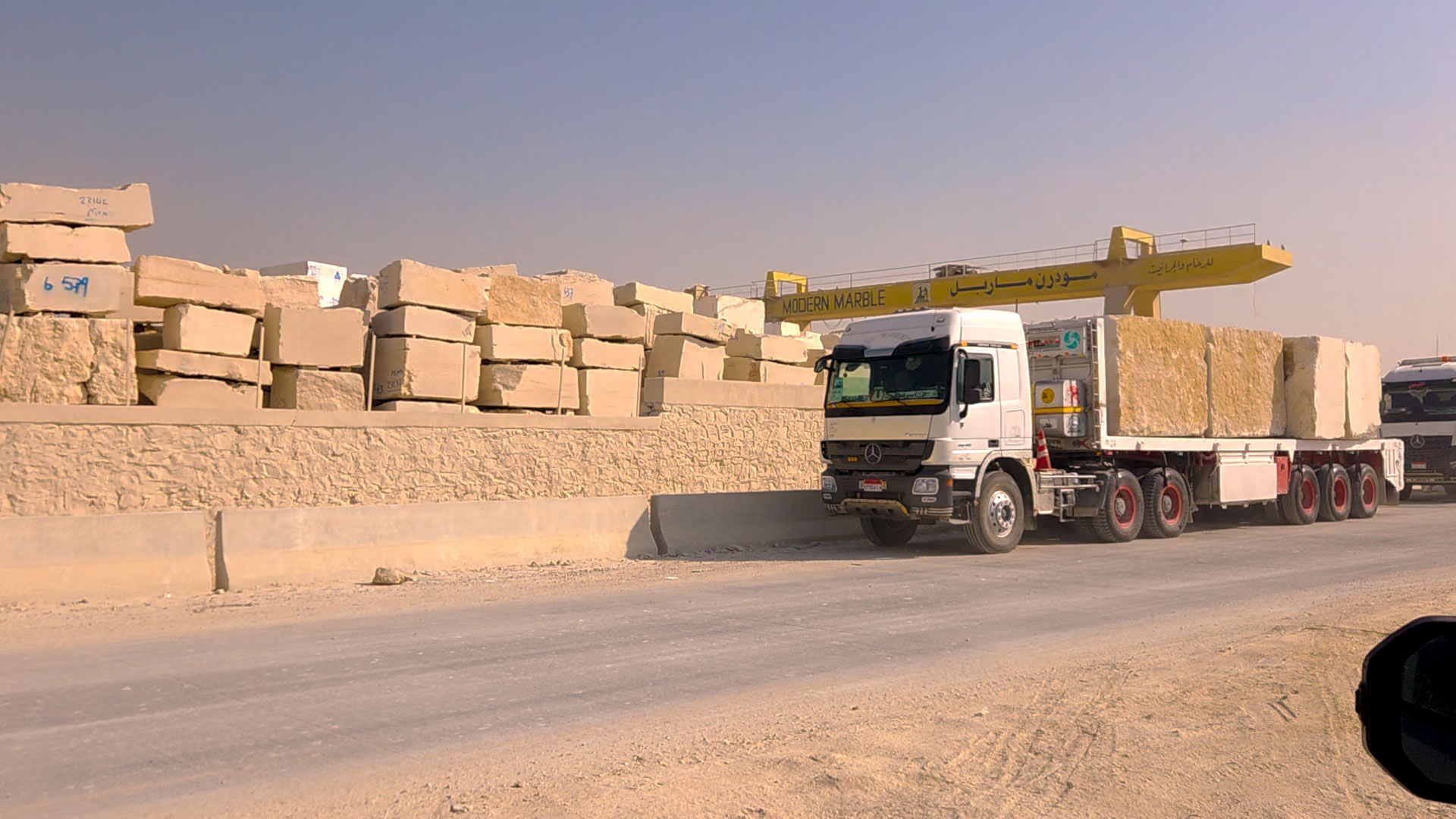
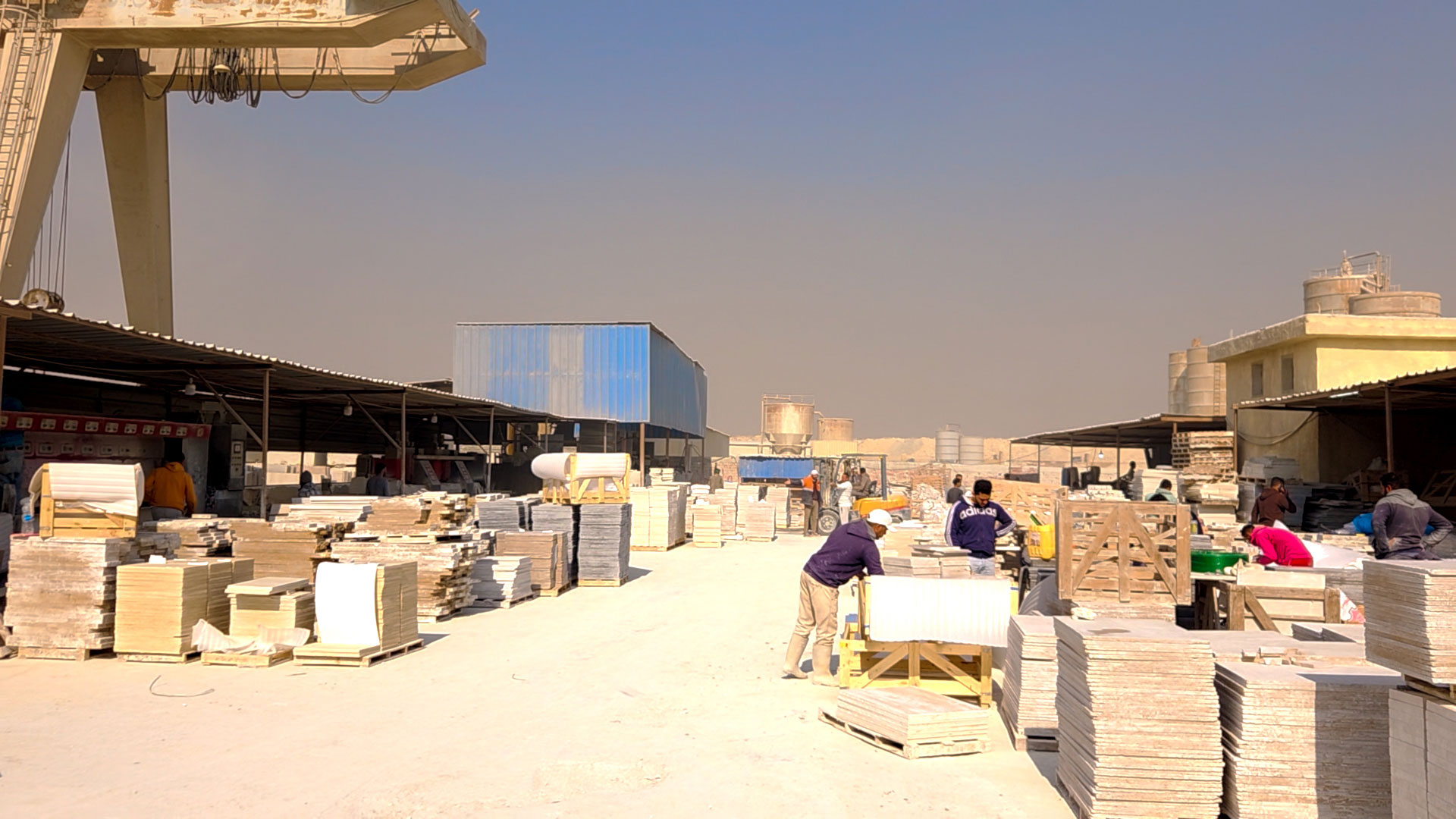
That phrase doesn’t do it justice. Stepping out, you’re immediately enveloped by the scale. This isn’t a discreet industrial estate; it’s a vast, living ecosystem dedicated to stone. To one side, the entrance to the quarries themselves, where the earth is sliced open to reveal its secrets. Ahead, a labyrinthine network of yards and workshops—the “masonry houses.”
The air is thick with the symphony of the trade: the high-pitched shriek of diamond-tipped saws, the deep rumble of diesel engines, and the constant, rhythmic *tap-tap-tap* of chisels on stone. Everywhere you look, there are blocks. Monolithic, raw limestone paving slabs the size of small cars, creamy whites, golden beiges, and subtle greys, waiting patiently under the sun. Some bear the rough, fossilised markings of millennia, while others are freshly cut, revealing their true colour for the first time.
Driving through the zone is an overwhelming sensory experience. There are yards specialising in granite and marble imported from Italy and Turkey, sitting shoulder-to-shoulder with yards celebrating Egypt’s own bounty. It’s a global stone marketplace, but our compass was set firmly on the local treasure: Egyptian limestone.
The Artisan’s Dance: Sandblasting, Bullnosing, and the Craft
Our next stop was a masonry production yard, a place of organised chaos that brimmed with skilled activity. This is where the raw block meets human ingenuity. The scale was immediately apparent—overhead cranes glided silently, moving multi-tonne blocks with a ballet dancer’s precision, a stark contrast to the raw power on display.
“They’re preparing an order for us now,” we noted in the video, spotting our own stone tucked away, a thrilling moment of connection. This was the very material destined for a British garden or patio, caught mid-transformation.
The centrepiece was the sandblasting machine, a rugged, drum-like contraption that seemed almost medieval in its simplicity, yet it creates one of the most sought-after finishes for modern limestone tiles. We watched, captivated, as a worker directed a high-pressure hose, blasting a stream of sand onto a slab’s surface. This process, far from being destructive, is a act of revelation. It texturises the stone, opening up its pores and giving it a beautifully consistent, rustic, non-slip finish that is perfect for UK weather. Seeing this ancient technique (powered by modern air compressors) demystified the finished product we sell. It’s not just a process; it’s an alchemy of air, sand, and stone.
Nearby, other artisans were focused on ‘bullnosing’—the delicate art of grinding a smooth, rounded edge onto a stone. There are no computer-controlled robots here; this is skill earned through years of practice, a steady hand guiding the stone against a spinning wheel. It’s a reminder that in an age of mass production, the creation of truly premium limestone paving still relies profoundly on human touch.
The Thrill of Discovery: New Stone Under an Old Sun
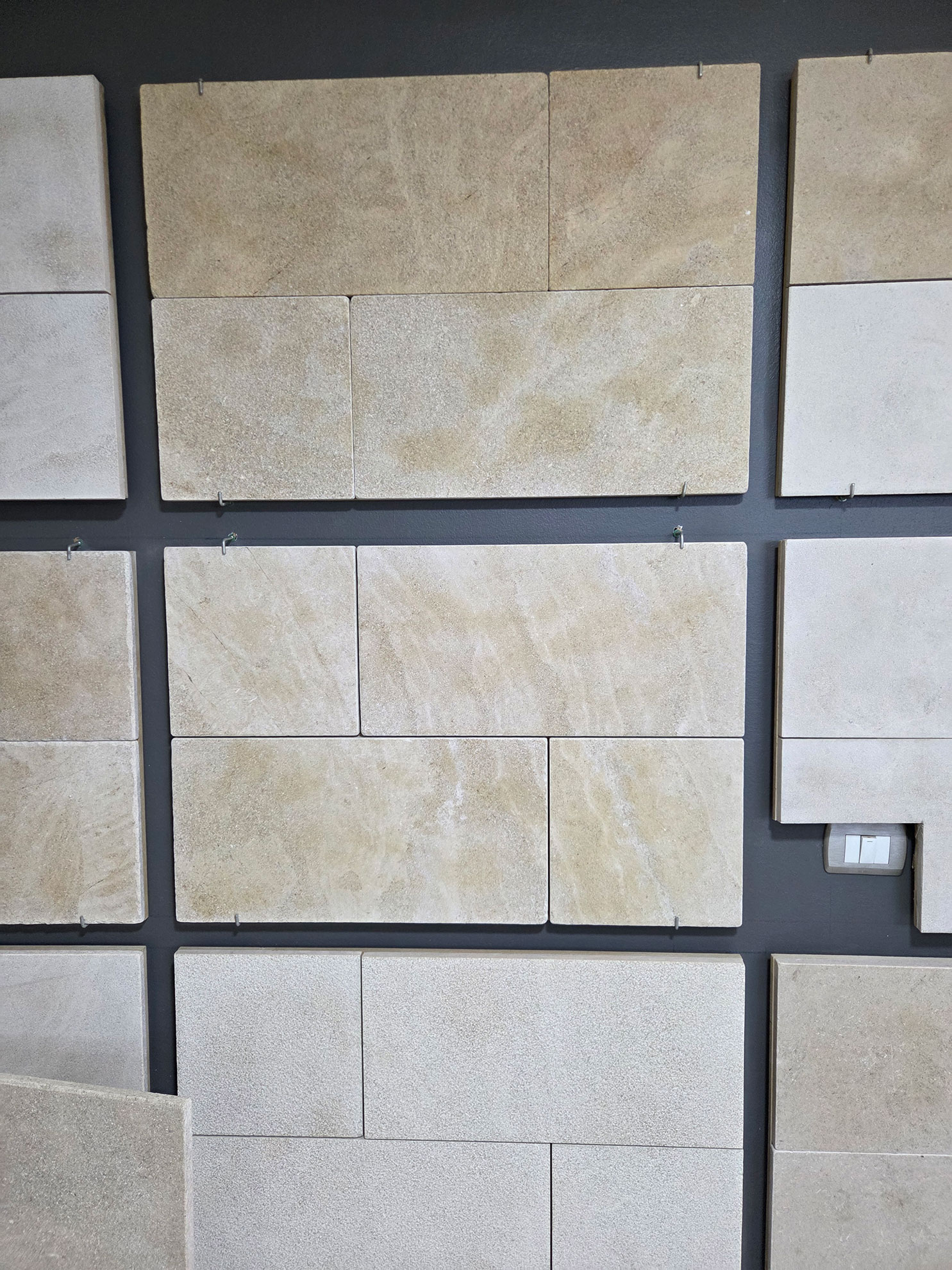
A sourcing trip isn’t just about verifying what you already know; it’s about keeping your sense of wonder alive. And Egypt delivered. Amidst the familiar classic creams and golds, we discovered a stunning browny-grey limestone that stopped us in our tracks.
Its colour palette—a complex blend of charcoal, taupe, and warm brown—was remarkably familiar. It instantly reminded us of one of our most popular porcelain tiles, Exbury Heritage. Yet here it was in its natural, un-replicated form. The excitement was palpable. “Everyone loves that tile,” we mused in the vlog, “so that was really interesting.” This discovery is the holy grail for a specialist: a natural stone that aligns perfectly with contemporary design trends but offers the unique, unrepeatable veining and character that only nature can provide. It’s a future star for our Egyptian limestone range, a testament to the fact that the earth still has new stories to tell.
We saw other wonders too: limestones with unique fossil beds, stones that took a honed finish to a glass-like polish, and varieties of granite with spectacular crystalline structures. The trip confirmed that Egypt is not a one-note supplier. It’s a diverse and deep geological repository, capable of furnishing everything from rustic patio slabs to sophisticated, sleek interior limestone tiles.

Beyond the Stone: Confronting Questions and Building Trust
Travelling to source materials from another continent comes with a profound responsibility. We are often asked, quite rightly, about the ethical foundations of our supply chain. Before we left, several contacts within the industry had quietly voiced concerns, with one phrase cropping up more than any other: child labour.
This was at the forefront of our minds, not as an accusation, but as a duty of care. We went with our eyes wide open. Our suppliers knew we were coming, but as we drove through the sprawling industrial zone, passing dozens of independent yards and factories, we observed openly and carefully.
What we saw was reassuring. The workforce was comprised of men—young men in their late teens learning a trade, and older, experienced masons whose hands told the story of their craft. We saw no evidence of the practices we had been warned about. As we noted, seeing 17 or 18-year-olds learning a skilled trade is “no different from the UK in that regard.” The atmosphere in our supplier’s yard was particularly telling: a family-run business where cousins and long-time friends worked together with clear camaraderie and, importantly, smiles. They enjoyed their craft, and they were proud of it.
However, to paint an entirely rosy picture would be disingenuous and would disrespect the complexity of the context. The health and safety culture is fundamentally different. It’s a visceral, first-hand realisation. From the way people navigate the chaotic streets to the open, unfenced building sites and the minimal use of personal protective equipment in some yards, the approach is rooted in a different reality. It is, as we described, “probably a little bit more like how we were doing it 140 years ago.”
This isn’t a criticism of Egypt; it’s an observation of a different stage of industrial development and a different set of societal risk calculations. It highlighted for us not a reason to disengage, but a reason to partner more closely with suppliers who share our core values. By building strong, direct, long-term relationships, we can foster a mutual understanding and encourage best practices that protect workers, not just procure stone.
A Meeting of Minds: Family, Stone, and Shared Values
Perhaps the most powerful moment of the trip wasn’t found in a quarry or before a new stone. It was in a simple conversation with our supplier. As we sipped fresh black coffee in a small office, the noise of the industrial zone a constant backdrop, we shared stories.
We discovered that their business, like Forest Stone, is a family affair. It’s run by brothers and cousins, built on trust with friends they’ve known for decades. The parallels were striking. They weren’t a faceless corporation; they were craftsmen and businesspeople who cared deeply about their reputation, their product, and their team. They spoke about the limestone not as a commodity, but as a legacy—a piece of their country’s heritage they were shaping for the world.
This connection transformed the transaction. We weren’t just a UK company sending an order to a distant factory. We were two family businesses, separated by geography but united by a passion for stone, shaking hands over a shared mission: to extract, work, and deliver this beautiful material with integrity.
“That was a bit like a hotter, dustier version of our yard,” we joked in the vlog, “with bigger lumps of stone.” In that humour lay a profound truth. The connection, the pride in the craft, the problem-solving, the dirt under the fingernails—it’s the same spirit. We just operate in different climates.

The Stone’s Journey Continues…
A long, dusty day trekking around the quarries outside Cairo draws to a close. The noise fades, replaced by the satisfying fatigue that comes from a mission accomplished. We came to learn, and we left enlightened. We came to verify, and we left validated. We came to source, and we left with discoveries.
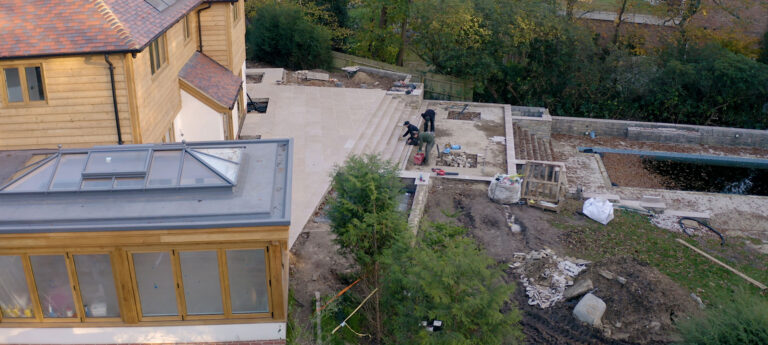
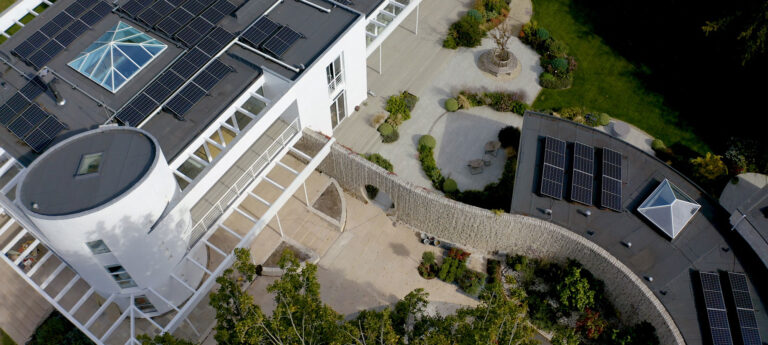
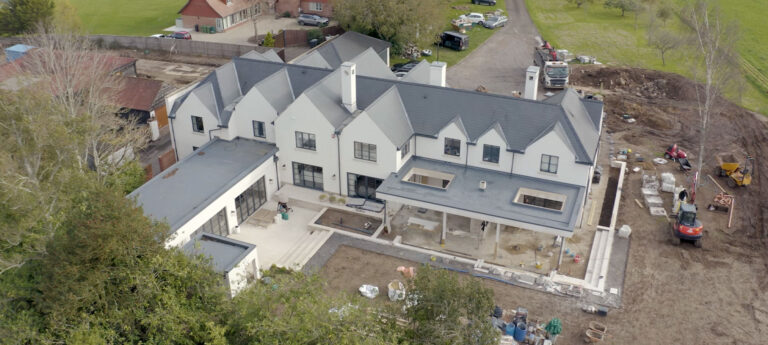
The blocks of stone we saw being sandblasted and bullnosed are now likely completing their journey, packed and shipped across the Mediterranean, through the Strait of Gibraltar, and to our yard in the UK. Soon, they’ll be loaded onto a truck and delivered to a project—perhaps a timeless patio in the Cotswolds, a sleek kitchen extension in London, or a serene courtyard in Edinburgh.
Now, when we walk through our own yard and run a hand over a pallet of Egyptian limestone, we don’t just see a paving slab. We see the Cairo sun. We hear the roar of the sandblaster. We remember the skilled mason’s steady hand. We recall the shared laughter with our supplier. And we feel the weight of that ancient geology, now ready to begin its new life, grounding a British garden in a history that stretches back to the pharaohs.
That is the true value of going to the source. It transforms stone from a mere material into a story. And at Forest Stone, we’re proud to be your storytellers.
Watch our full journey in the video below.