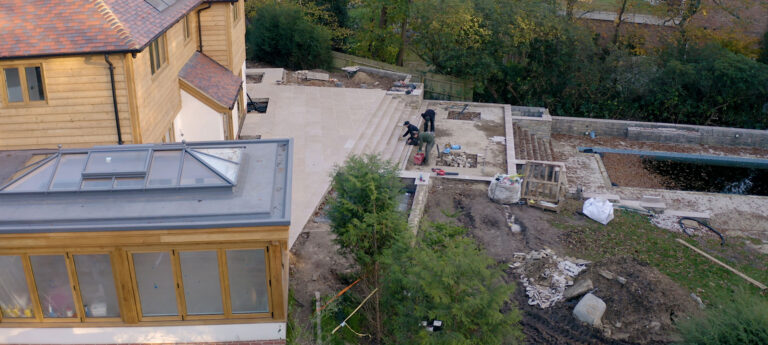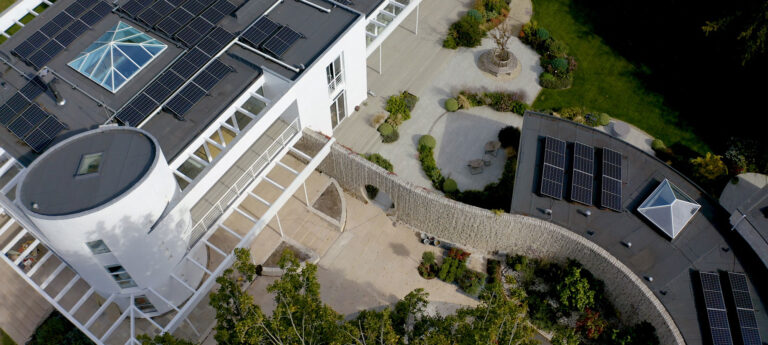


There’s a distinct rumble happening in the world of garden design. It’s the sound of sledgehammers and diggers taking apart bland, grey patios, and the satisfied sighs of homeowners who have finally realised that perfection is overrated.
I’m talking, of course, about the return of crazy paving. Ok, this opening is a bit hyperbolic and potentially a bit premature, but there sure are some signs that crazy paving is coming back!
For the longest time, if you mentioned crazy paving to a homeowner, you’d be met with a wince. It conjured up images of uneven paths, moss-ridden driveways, and the sort of DIY job that involved a bag of cement and absolutely no measuring tape. It was, for many, a relic of the 1970s—something to be ripped up and replaced with the clean, uniform lines of porcelain or sawn stone.
But here at Forest Stone, we’ve noticed a shift. And honestly? We like it.
We’re seeing a huge resurgence in demand for irregular paving and organic paving. It’s a trend that has been growing in Australia for years, and it has finally washed up on our shores. The new wave of crazy paving isn’t your grandad’s old patio. It’s sleeker, more sophisticated, and when done right, it’s one of the most beautiful and naturalistic hard landscaping choices you can make.
So, grab a cuppa. Let’s dive into why this nostalgic trend is back, how the Australians have mastered it, and how you can use our brand new Lymington Dune Organic Paving and Godshill Organic Paving stones to bring a slice of natural artistry to your outdoor space.
A Brief History: From Roman Roads to 70s Driveways
Let’s dig into the background here: crazy paving isn’t a modern invention, nor was it born in the 1970s. Its origins are far more noble. The technique of using irregular stones to create a durable surface dates back to the Romans. They used it to build the roads that would conquer Europe—fitting stones together to create a robust, long-lasting surface.
The “crazy” part doesn’t refer to the look; it refers to the lack of straight lines. You could say it’s about freedom.
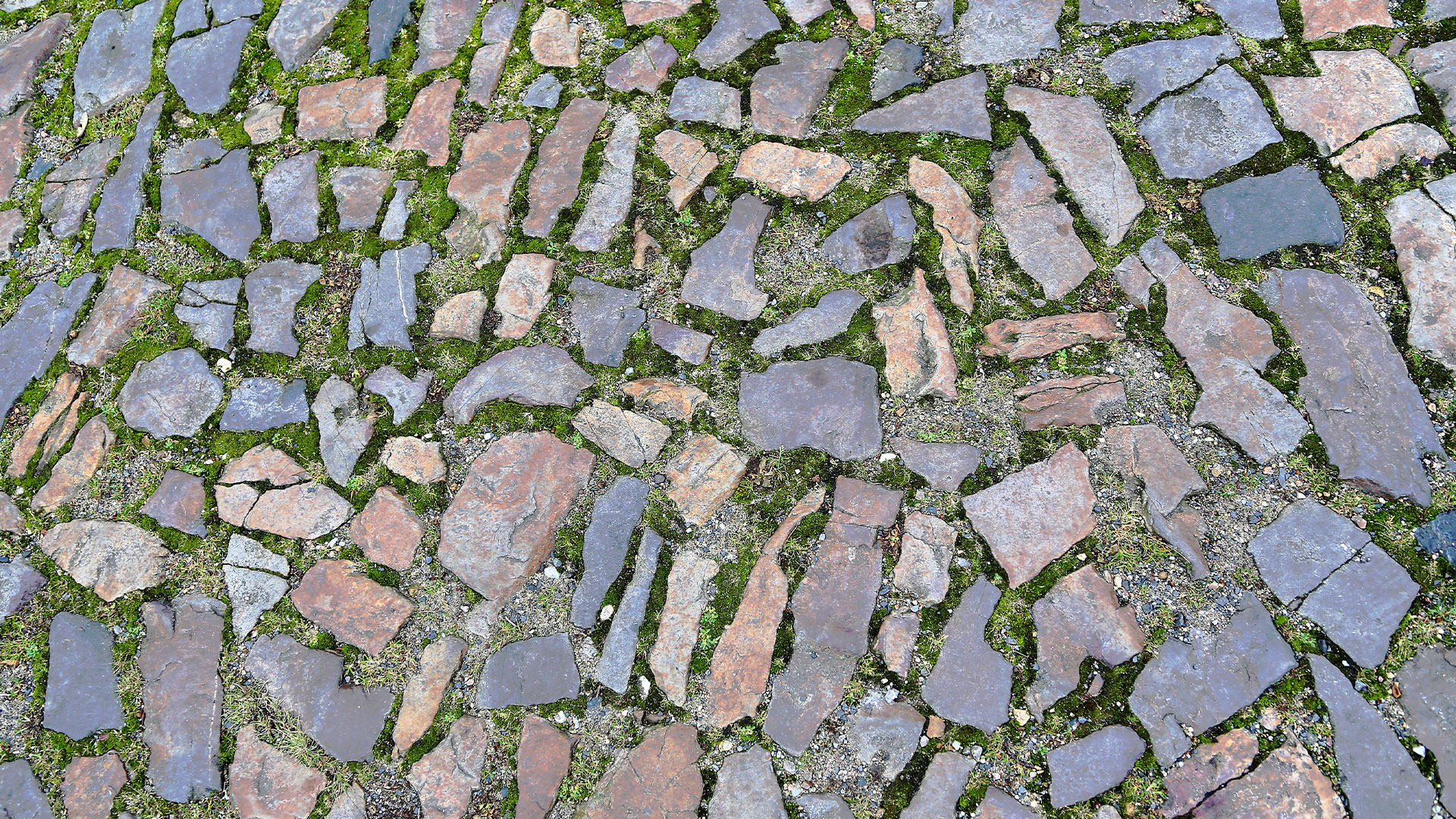
Fast forward a couple of millennia to the mid-20th century. After the austerity of the war years, the 60s and 70s brought a burst of colour and creativity to British homes and gardens. Crazy paving became the go-to choice for the suburban gardener. It was affordable, it could be done by a keen DIYer, and it felt natural. It was also a huge trend in California at the time and this drove it’s popularity on our shores.
However, as with all trends, the pendulum swung. The 80s and 90s ushered in an era of minimalism and uniformity. We wanted everything smooth, flat, and grey. Crazy paving was ripped out in favour of geometric square or rectangular slabs. It fell out of fashion, relegated to the history books as a garden faux pas.
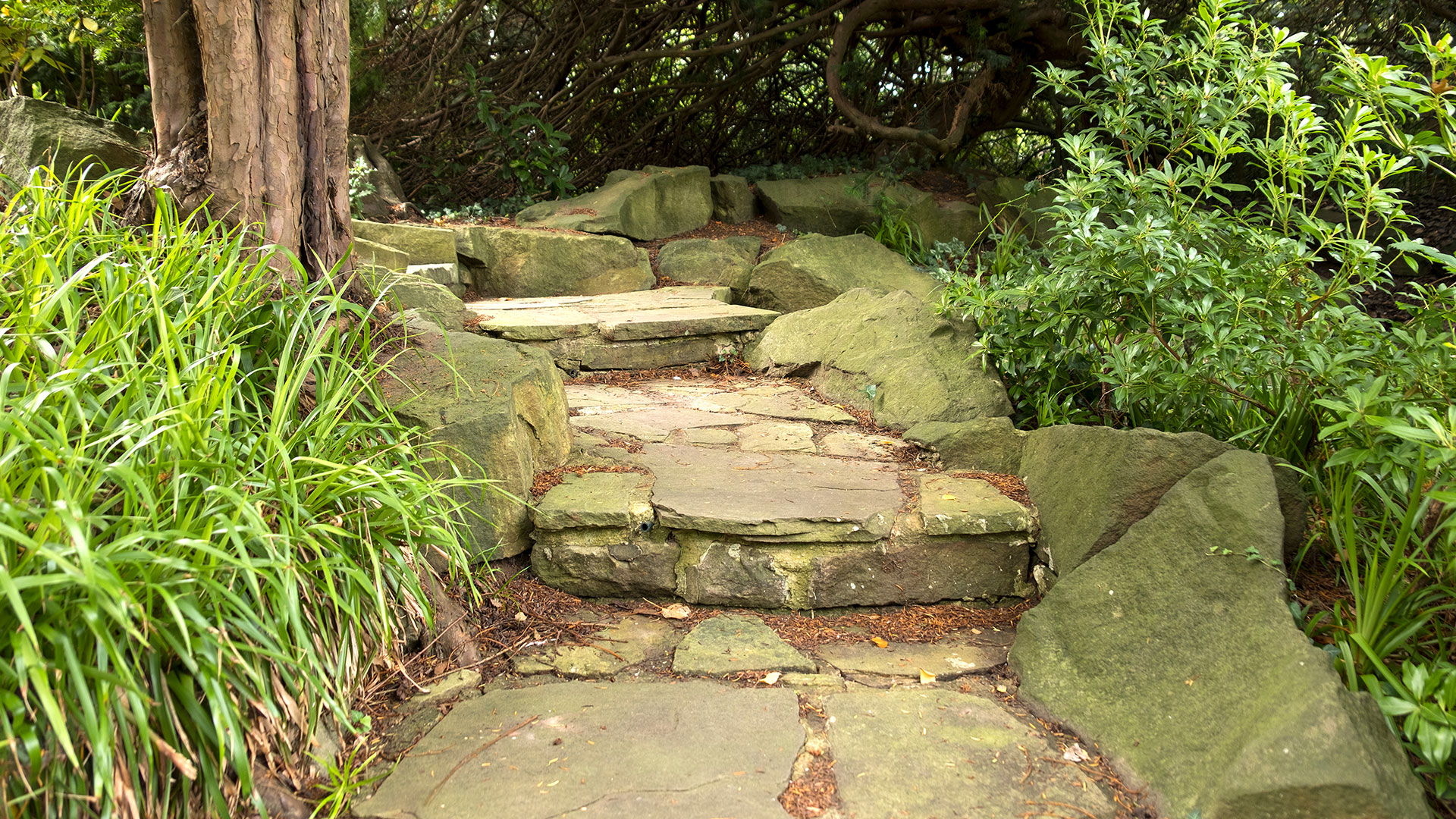
But here’s the thing about fashion: it’s circular. And now, as we crave authenticity, texture, and a connection to nature in our gardens, the pendulum is swinging firmly back.
The Aussie Influence: Tighter Joints, Contemporary Looks
So, what’s changed? Why does the new crazy paving look so different from the old?
The answer lies, in part, with our friends Down Under.
Australia has always had a closer relationship with indoor-outdoor living than we have in the UK. Their gardens are extensions of the house, and their paving choices reflect that. They’ve been using irregular paving for decades, but they’ve evolved the installation method to suit a modern aesthetic.
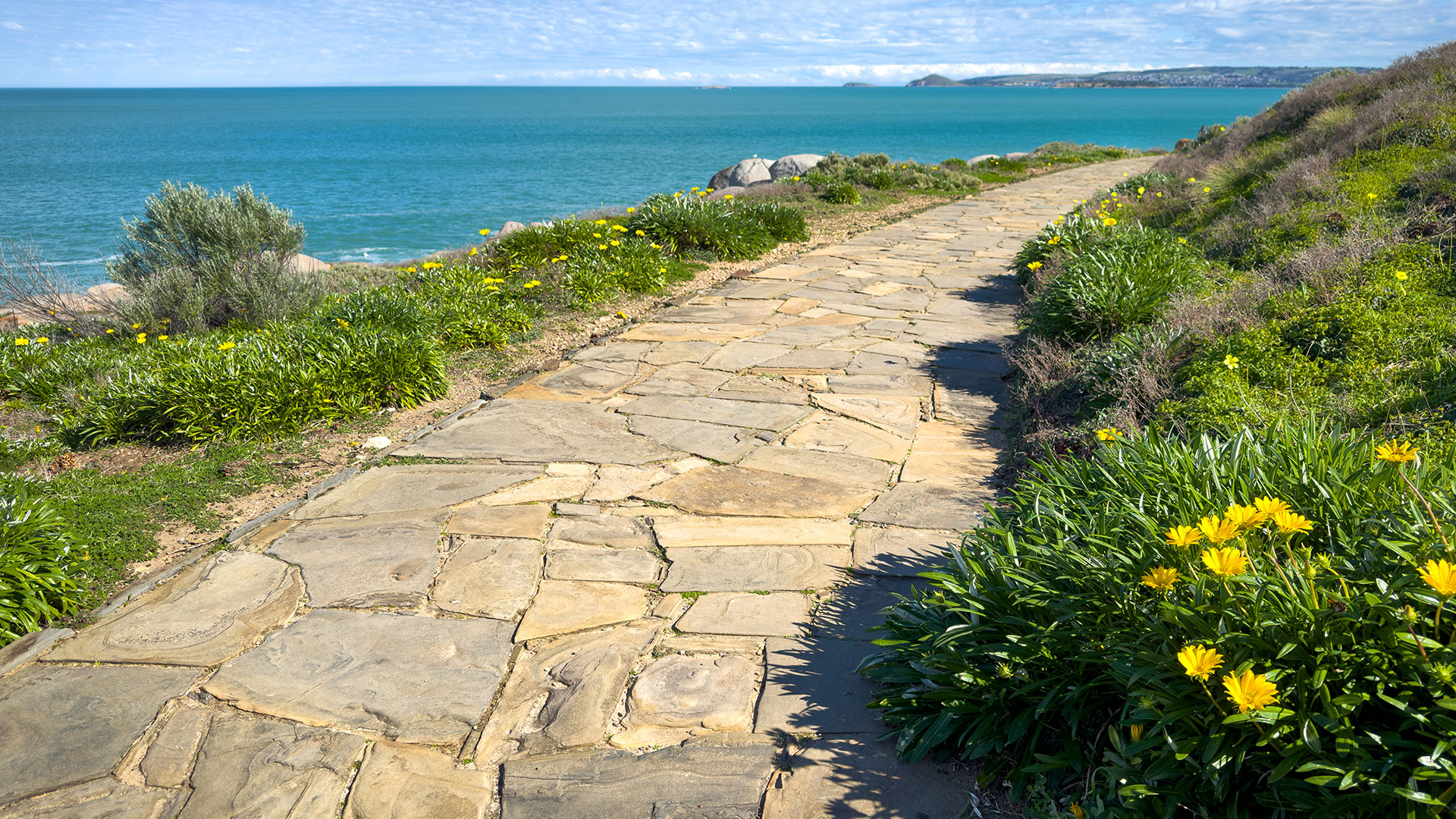
The key difference is the grout gap.
If you look back at photos of 1970s crazy paving, you’ll notice the joints are massive—often two or three inches wide, filled with sloppy mortar. It looked haphazard because it often was.
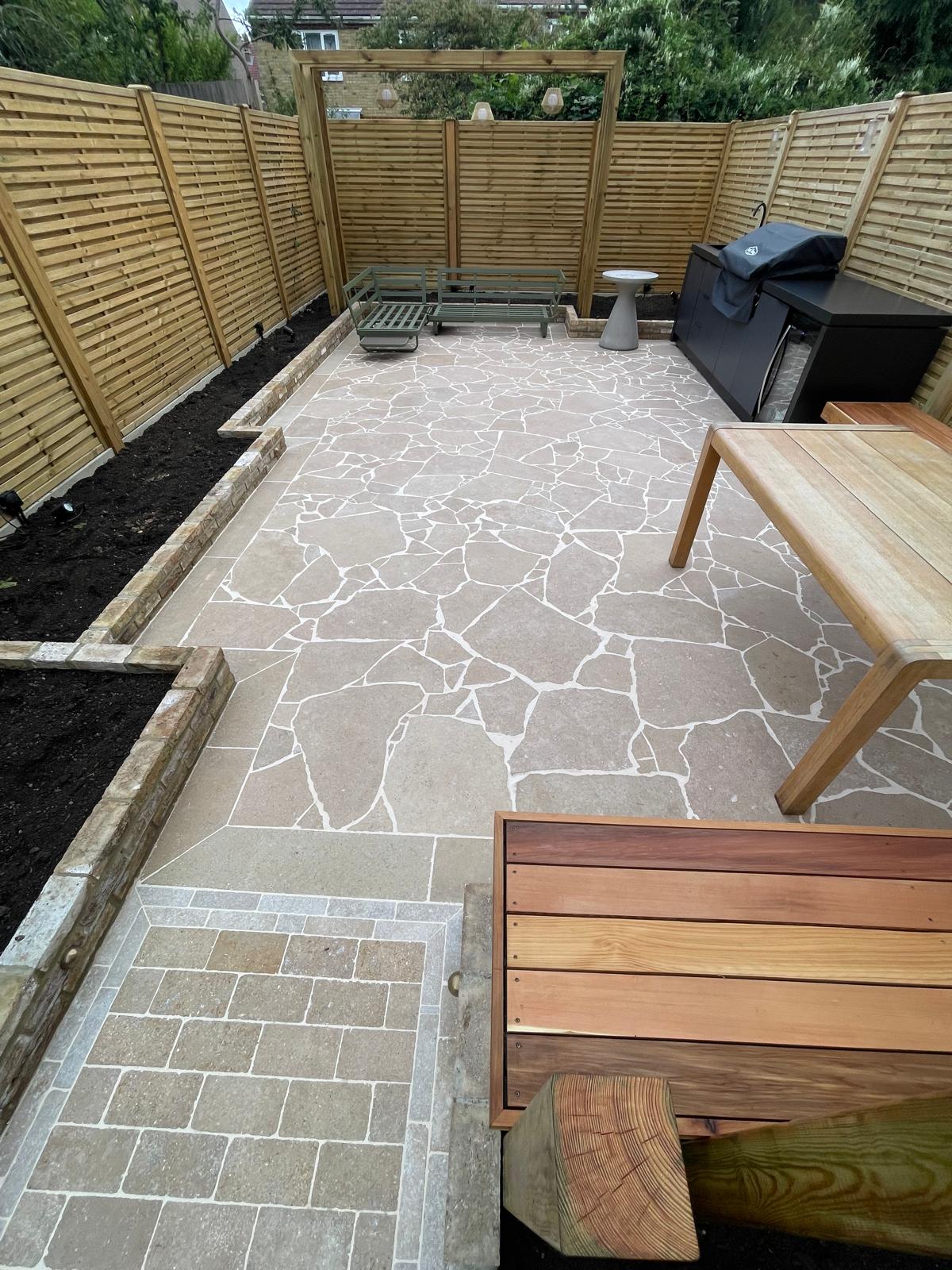
The Australian method, which is now becoming the gold standard here in the UK, is the opposite. It’s a far more time-consuming and precise art. It involves carefully selecting each piece of stone and dry-laying them like a giant, natural jigsaw puzzle. The goal is to get the joints as tight as possible—sometimes just 10mm to 20mm wide.
This is meticulous work. It requires a skilled landscaper with a good eye for shape and flow. You can’t just tip a pile of stones out and hope for the best. You have to turn each piece, find its mate, and slowly build the pattern.
But the result is breathtaking. With tight joints, the stone becomes the hero. The paving reads as a cohesive, fluid surface rather than a collection of random chunks held together by cement. It looks sleek, contemporary, and incredibly sophisticated. It bridges the gap between the natural, organic feel of stone and the clean lines demanded by modern architecture.
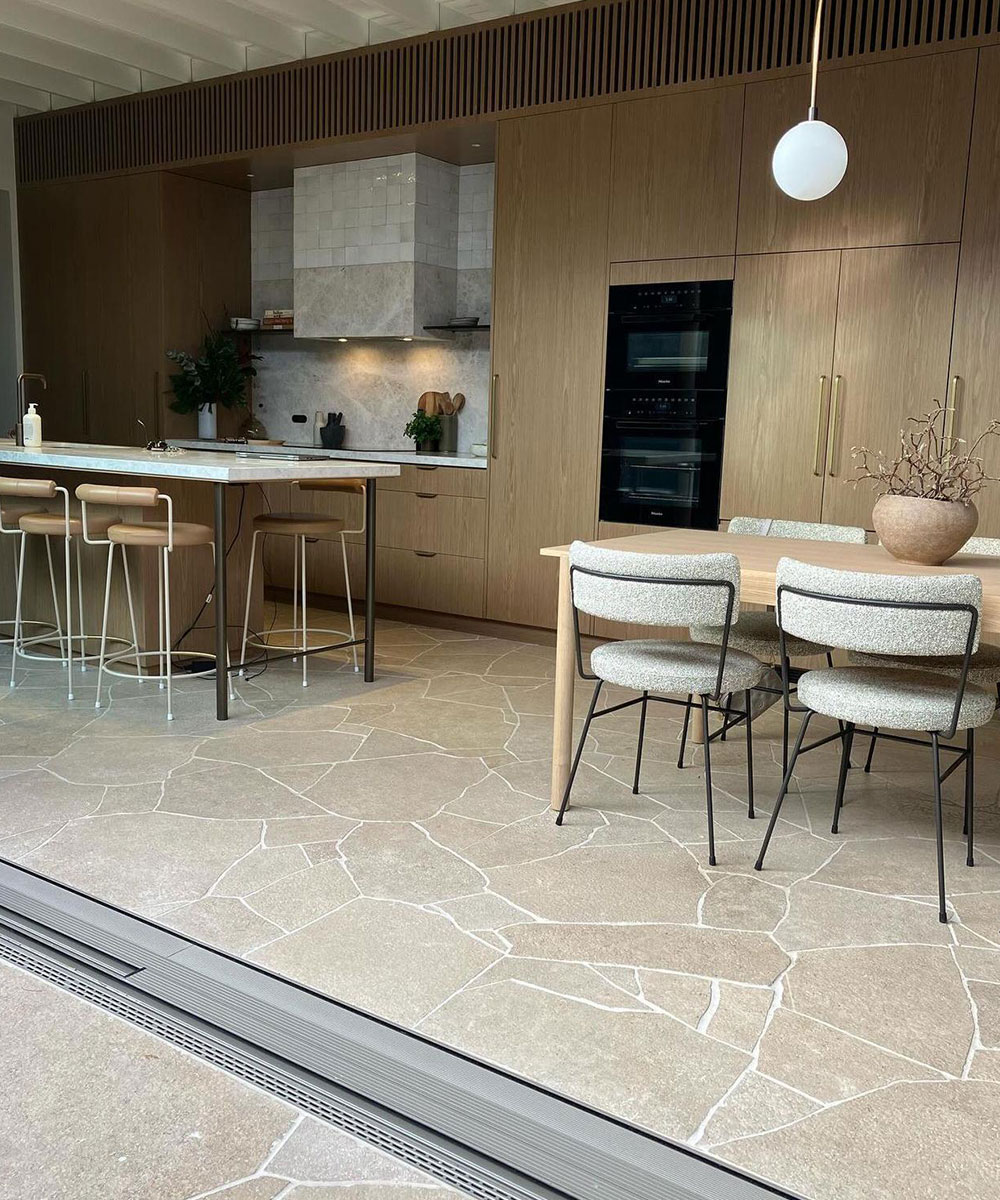
This is the style we are seeing take over the UK. It’s a style our new ranges are perfectly suited for.
Introducing Forest Stone’s New Organic Ranges
To meet this growing demand for high-quality, beautiful irregular stone, we are thrilled to shine a spotlight on two stunning new additions to the Forest Stone family: Lymington Dune Organic Paving and Godshill Organic Paving.
These aren’t just offcuts. These are premium, carefully sourced natural stone products designed specifically for the revival of this craft.
Lymington Dune Organic Paving
If you are looking to capture the light, airy feel of a coastal retreat, Lymington Dune is your stone. It features a beautiful, neutral palette of soft creams, warm sands, and subtle hints of grey.
Imagine this stone laid in tight-joint style, surrounding a natural swimming pond or leading down through a planting scheme of ornamental grasses and lavender. It doesn’t shout for attention; it quietly grounds the space, reflecting light and making the garden feel larger and more open.
The subtle variations in the dune colouration mean that every piece is unique. When laid as organic paving, it creates a surface that is full of depth and interest, yet remains calming and understated. It’s incredibly versatile and pairs beautifully with both dark timber fencing and white-rendered walls.
Godshill Organic Paving
For those who prefer a bit more drama and rustic charm, look no further than Godshill Organic Paving. Inspired by the rugged beauty of the Isle of Wight’s countryside, this stone brings warmth and character to any project.
With its rich, multi-tonal browns, ochres, and hints of russet, Godshill feels wonderfully earthy and grounded. It’s the perfect choice for a cottage garden path, a woodland clearing patio, or a terrace where you want to feel nestled into the landscape.
When laid with those tighter, more precise joints we spoke about, the Godshill stone transforms. The rich colours pop against the slim lines of the mortar (or even against the dark green of a planted joint), creating a surface that feels both ancient and entirely contemporary. It’s a stone that tells a story, and it will age beautifully, developing a natural patina over time.
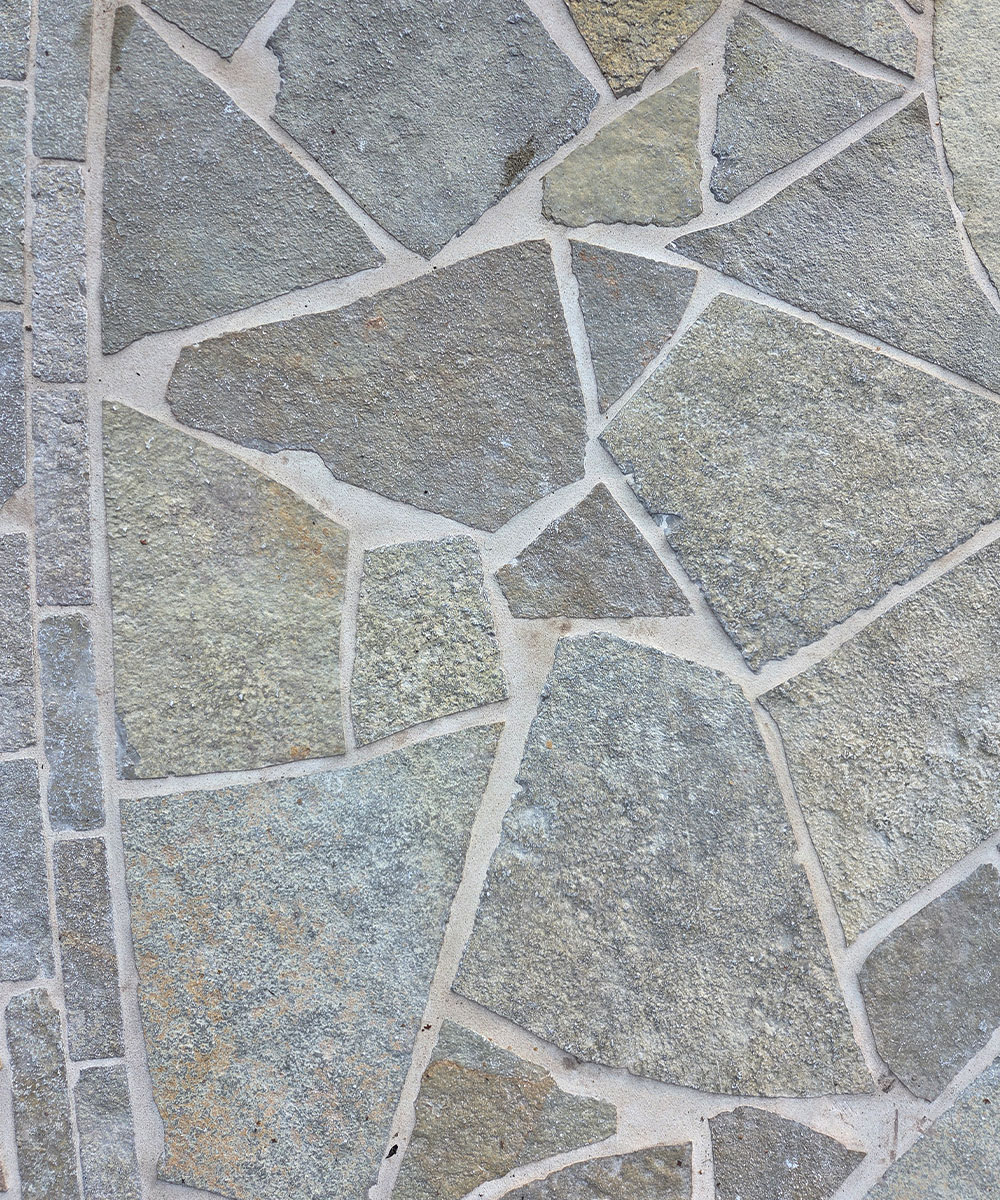
Both of these ranges have been selected because they possess the right qualities for a stunning crazy paving project: they have straight-ish edges on irregular shapes, varied sizes, and consistent thickness, making the “jigsaw” process easier and the final result more professional.
How to Implement Organic Paving Tastefully in Your Garden
So, you’re sold on the idea. You love the look of the Lymington Dune or the Godshill. But how do you ensure your project ends up looking like the contemporary Australian inspiration, rather than a 1970s time warp?
Here are a few essential guidelines to keep in mind.
1. Embrace the “Jigsaw” Mentality
This is the most important point. Do not let your landscaper just throw the stones down and fill the gaps with mortar. Insist on a dry lay first. The stones should be laid out, moved around, and adjusted until the pattern flows. The joints should be consistently tight. This takes time, and time is money, but the investment is worth it for a finish that looks intentional and beautiful.
2. Think About Your Grout
The colour of your grout makes a massive difference. For that contemporary look, avoid a bright white cement. It will be too stark and will fight with the natural stone. Instead, opt for a mortar mix with a buff or grey colourant, or look for specific paving grouts that match the dominant tone of your stone. The goal is for the mortar to recede, allowing the stone to be the star. In some low-traffic areas, you can even consider “open joints” filled with fine gravel or planting.
3. Let Nature Soften the Edges
One of the greatest advantages of irregular paving is how it interacts with the garden. Unlike a solid concrete slab, crazy paving has natural nooks and crannies. Embrace these!
In the tight joints, allow small plants to self-seed or deliberately plant creeping herbs. Think thymes, camomile, or mind-your-own-business. This softens the hard landscaping and blurs the line between the built and the natural. It prevents the paving from looking too sterile. A moss that can handle light foot traffic, like Sagina subulata (Irish Moss), can also be tuck-pointed into the joints to create a soft, green carpet over time.
4. Consider the Setting
While organic paving is wonderfully versatile, think about where you place it. It is sublime for pathways, informal terraces, and transitions between different areas of the garden. However, as mentioned in the inspiration for this piece, be mindful of putting it under a formal dining set. A wobbly table or a chair that rocks every time you sit down can be frustrating. If you want an eating area, consider a section of more level paving within the organic layout, or ensure your landscaper creates a very flat, even finish despite the irregular shapes.
5. Choose Sympathetic Materials
This is where our Lymington Dune and Godshill ranges shine. They are natural stone. They will age and weather gracefully, developing a patina that synthetic materials simply cannot replicate.
When choosing your stone, look at your house and your surroundings. If you have a warm brick home, the earthy tones of Godshill will look stunning. If your home is modern with lots of glass and white render, the soft, coastal vibe of Lymington Dune will create a seamless transition from inside to out. Using stone that feels native to the landscape, or at least complementary to the architecture, ensures the final look is cohesive and harmonious.
Why This Trend is Here to Stay
The return of crazy paving isn’t just about nostalgia. It’s a reaction against the sterile perfection that has dominated gardens for the last two decades. We are realising that a garden should feel alive. It should have texture, character, and a sense of connection to the earth.
Organic paving provides that. No two pieces are the same, just as no two plants are the same. It allows for curves and flowing lines that are difficult to achieve with rectangular slabs. It creates a patina over time, telling the story of the seasons and the weather.
It is a trend that embraces imperfection, and in doing so, it creates perfect gardens.
Whether you are drawn to the soft, sandy hues of the Lymington Dune or the rich, earthy tones of the Godshill, now is the time to rediscover the potential of irregular paving.
It’s time to get a little bit crazy.
Special thanks to Katerina Kantalis Garden Design for allowing us to use photos of her project in this blog and for also pushing us to stock this lovely product!
If you’re feeling inspired and would like to discuss a project, or if you simply want to get your hands on some samples of our new Lymington Dune or Godshill Organic Paving, get in touch with the team at Forest Stone. We’re always happy to talk stone.