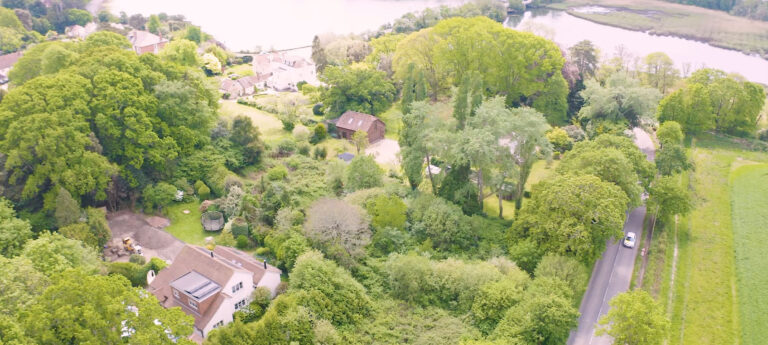


There’s a particular quality of light on the Dorset coast in late summer. It’s a gentle, honeyed glow that seems to soften edges and warm the soul. It was under this exact light that we found ourselves on a truly wonderful project in Dorset, not far from Dorchester, surrounded by the hum of final-phase construction and the scent of salty coastal air. This wasn’t just a building site; it was the final act in realising a vision—a modern, coastal dream home where architecture and landscape perform a seamless, breathtaking duet. And at the heart of this performance was a familiar, sun-bleached character: our Egyptian-sourced Lymington Dune Limestone.
This project, a masterful collaboration between the client, architect, builder Alan Horley Construction, and garden designer Sarah Talbot, is a case study in how a single, thoughtfully chosen material can define a space. It’s a story of versatility, bespoke craftsmanship, and a quietly sustainable ethos that proves luxury and responsibility can walk hand-in-hand.
Setting the Scene: A Canvas of White and Light
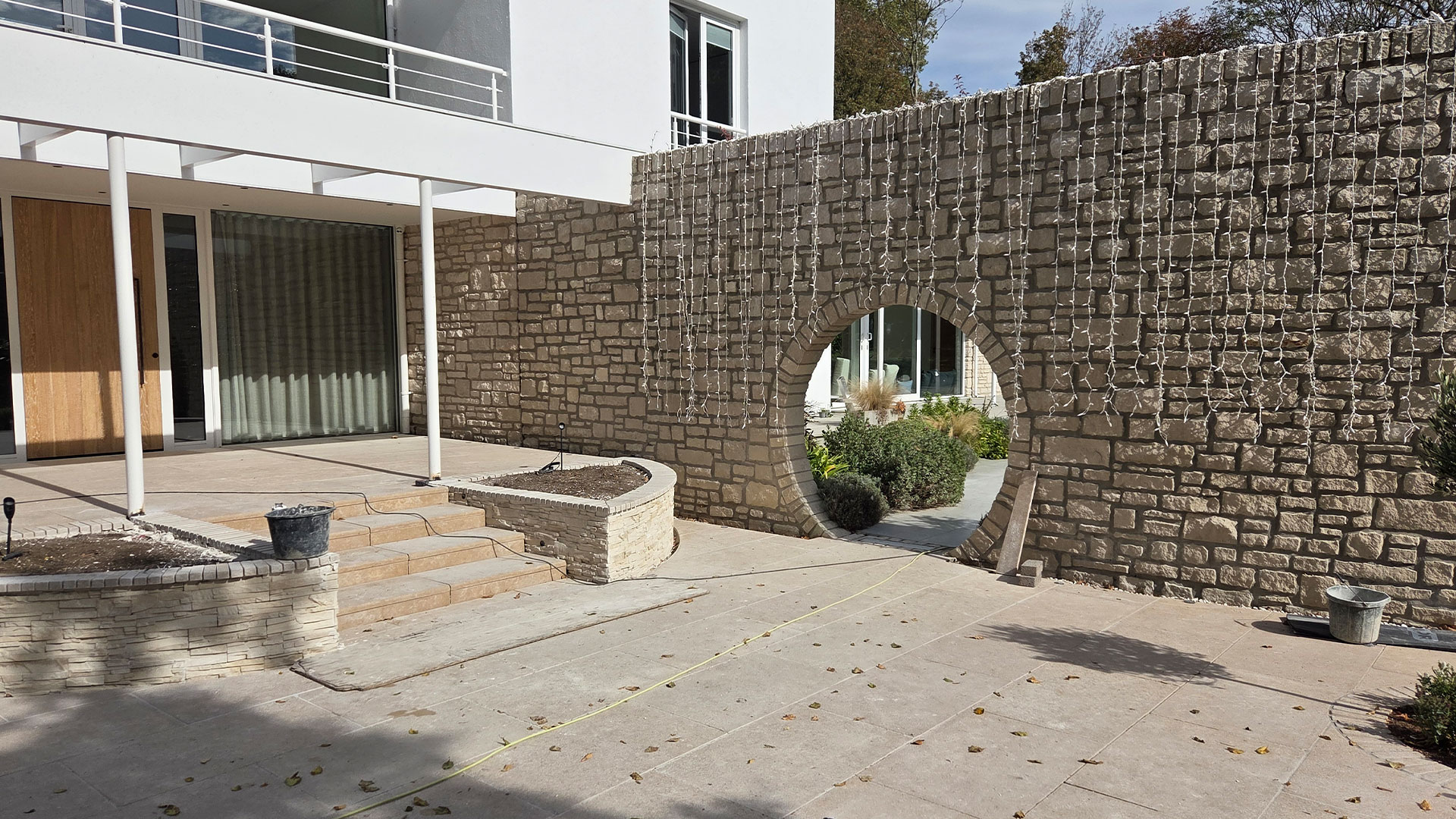
The house itself commands attention with its clean, curved lines and crisp, white rendered walls. It’s a bold statement against the rolling Dorset landscape—a structure that feels both modern and timelessly anchored to its coastal context. The design brief, as our guide Craig noted on-site, was unequivocally “coastal vibes.” But this wasn’t about clichéd nautical ropes and blues; it was about evoking the serene, sun-drenched essence of the Mediterranean, translated for the British seaside.
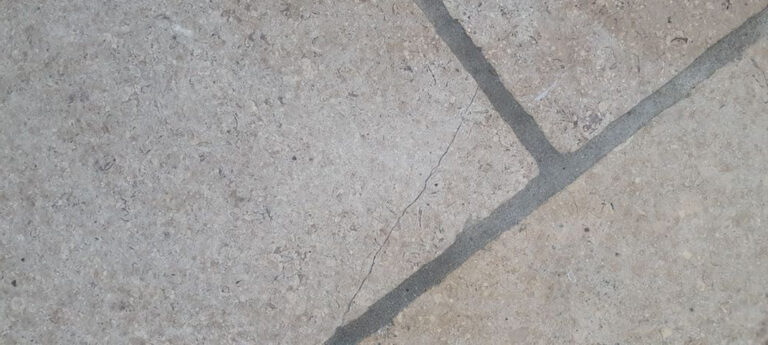
Enter Lymington Dune. This particular Egyptian limestone is a masterpiece of natural geology. Its palette is a complex blend of creamy beiges, soft sandy tones, punctuated by subtle fossil detailing. It doesn’t shout; it whispers. It doesn’t reflect the cool light of the UK sky, but seems to retain and emit the warmth of its desert origin. Against the brilliant white walls, it was, in the words of the team, “a perfect accompaniment.” It provided the crucial textural contrast and organic warmth that stopped the architecture feeling sterile, instead grounding it in the natural world.
The Stone’s Versatile Performance: From Terrace to Tactile Detail
The core of this project lies in how the Lymington Dune was orchestrated across the garden design scheme. This wasn’t a one-note application; it was a symphony in three distinct movements, showcasing the uplifting effect that premium limestone paving can bring to a space.
The Base – 900x600mm Paving
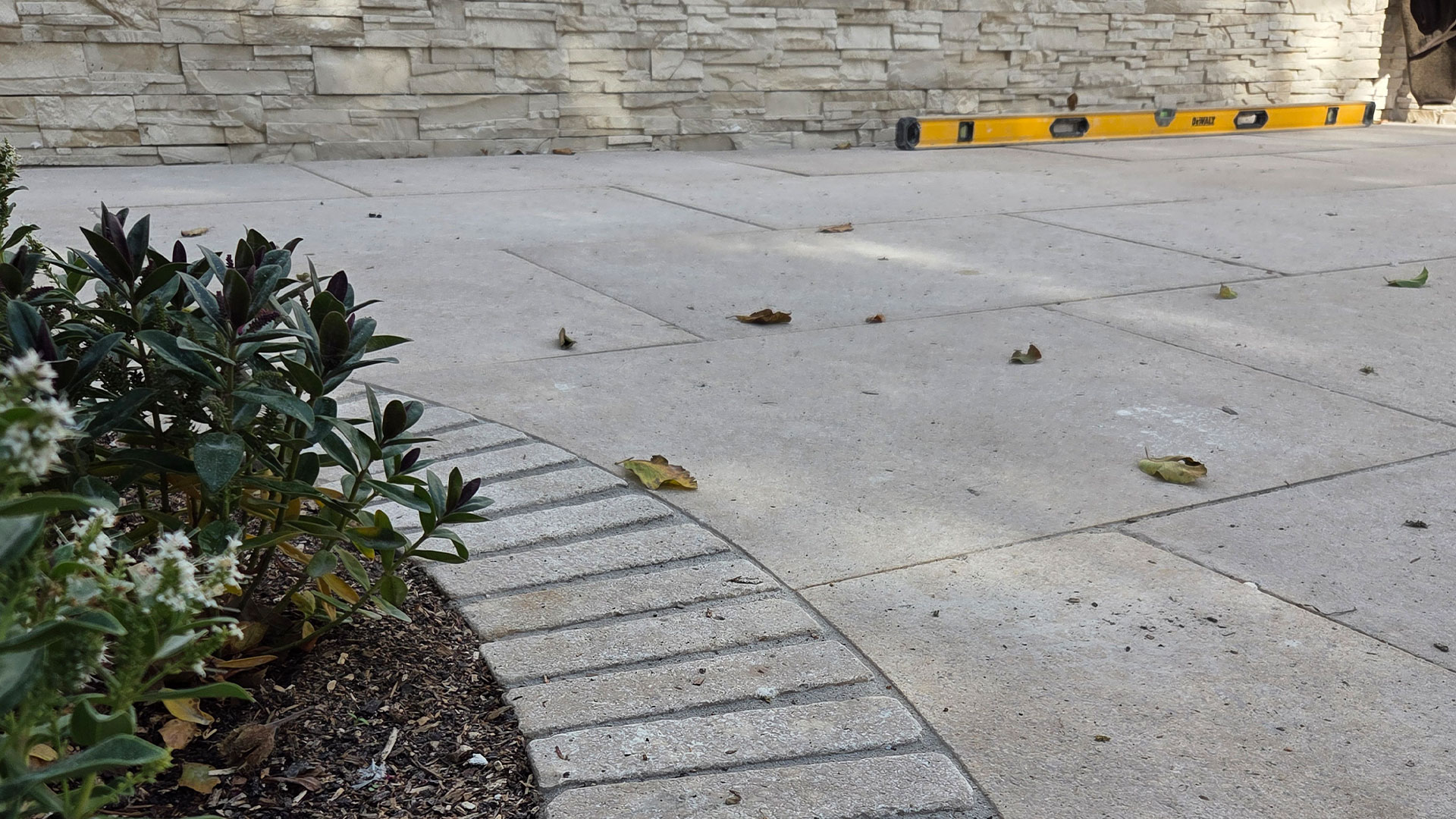
For the main terraces surrounding the property, large-format 900x600mm slabs were the clear choice. This size creates a sense of grandeur and continuity, reducing visual clutter from too many joints and allowing the natural beauty of the stone to take centre stage. The clean lines of the large slabs reinforce the modern architecture, while the stone’s inherent, slightly textured finish provides a gentle, non-slip surface underfoot—a practical necessity in a coastal environment where sea mists can descend. Walking across this terrace, you feel the solidity and space, a perfect stage for outdoor living. The textured surface also brings that little essence of country character.
The Delicate Frame – Slim 200x50mm Pavers
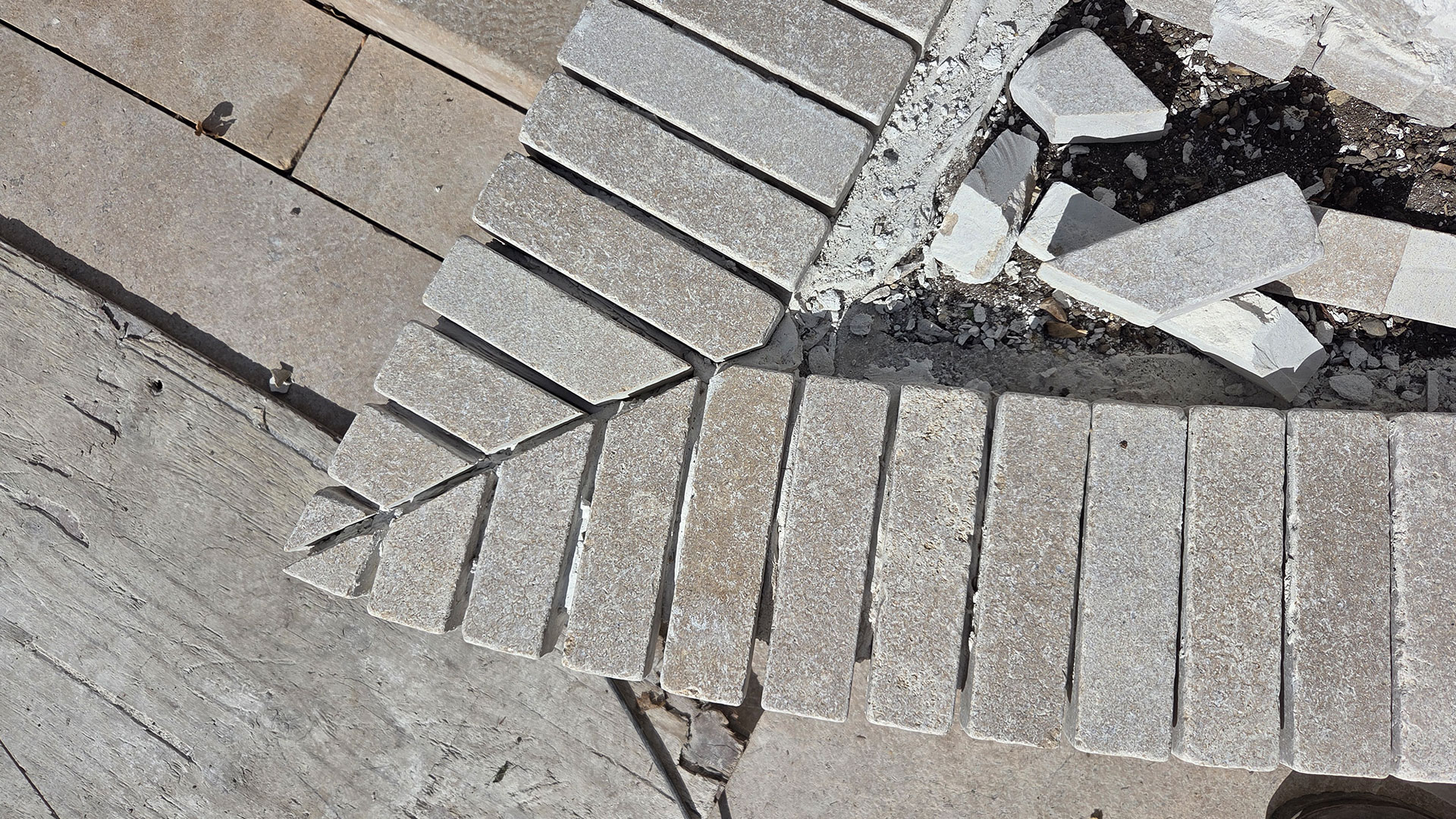
In design, it’s often the details that sing the loudest. Here, the same Lymington Dune Limestone has been used in several formats including the slim, elegant 200x50mm pavers. These were used as sophisticated edging, creating crisp borderlines between different zones— separating the terrace areas from planting beds. They were also used to create intricate detail areas, such as to cap walls, adding a layer of refined craftsmanship. This slim format introduces a rhythm and a subtle linearity that plays beautifully against the large slabs, proving that a single stone can provide both the bold statement and the delicate jewellery.
The Grand Staircases – Bespoke Half-Bullnosed Steps
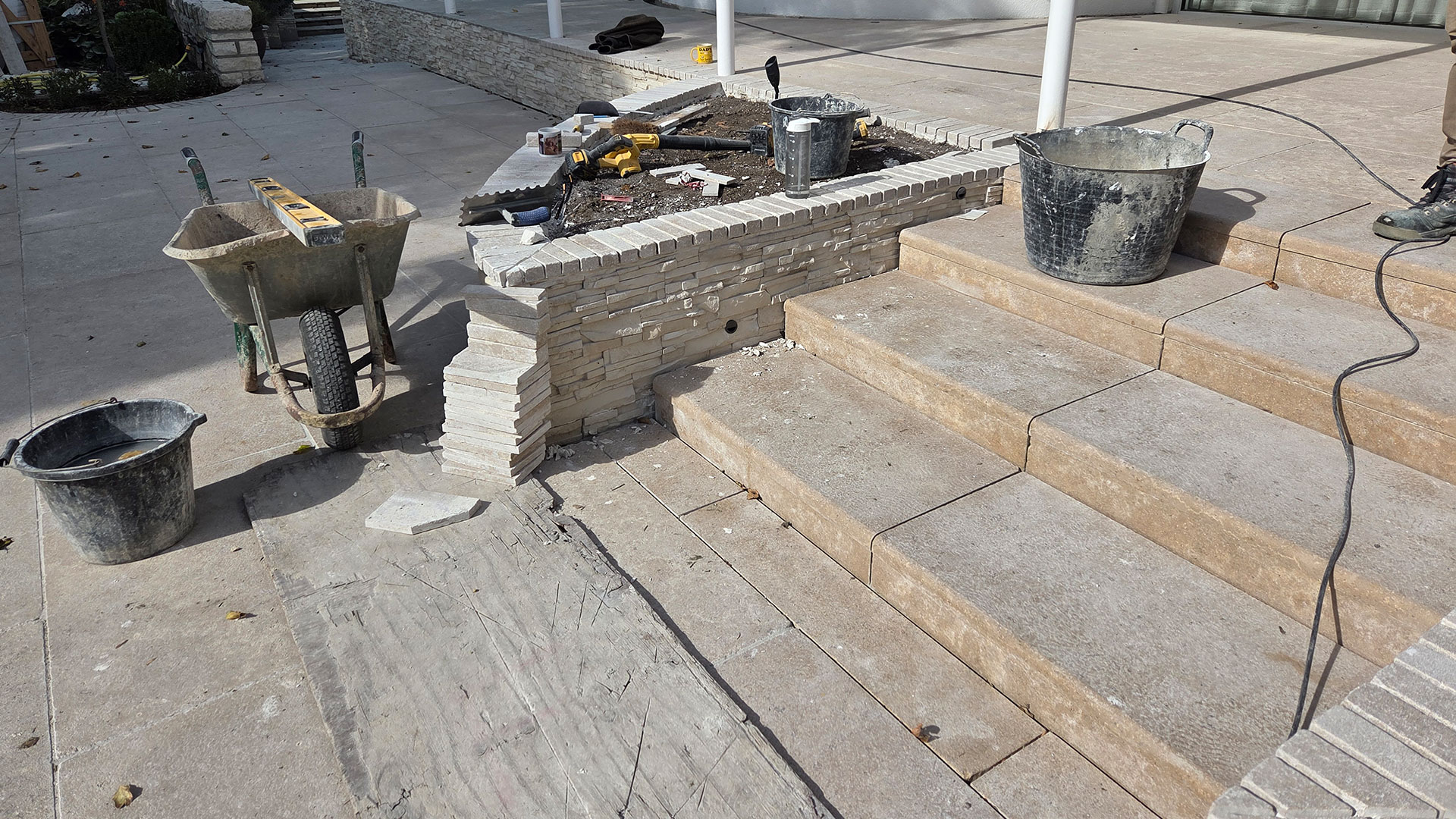
And then, the pièce de résistance. The property featured two sets of what Craig aptly calls “real statement steps.” These were not off-the-shelf solutions. The client had a very specific vision: a bespoke limestone finish known as a half bullnose. This meticulous masonry technique involves grinding a smooth, half rounded edge on the front of the step tread, while leaving the underside squared off. The result is beautifully elegant—a soft, welcoming profile that is luxurious underfoot and catches the light beautifully.
But the innovation didn’t stop at the shape. “You won’t quite appreciate from the shots,” Craig points out in the video, but each flight was custom-routed with discreet channels on the underside to house LED strip lighting. The vision? That on warm, sunny evenings, as dusk falls, these majestic steps will emit “a nice glow under each flight.” This is custom limestone step design at its most imaginative—where stonework and technology merge to create not just a functional connector, but an atmospheric, sculptural element that transforms as day turns to night.
Beyond Our Stone: A Tapestry of Materials and a Philosophy of Care
A project of this calibre is always a tapestry. Alongside our Lymington Dune, the site featured beautiful, locally significant Portland stone walling and elegant stone façade tiling. This layering of textures and origins—Egyptian limestone beside historic British stone—created a rich, mix of materials.
Yet, what truly set this project apart was a philosophy that wove through every decision. “The client’s quite keen on kind of reduce, reuse, recycle,” Craig explains. And this wasn’t a token gesture. It became the creative brief for the build team, led by Alan Horley, who embraced it with ingenious flair.
Instead of sending felled trees to the chipper, they were stripped and stacked to create a stunning, rustic log wall that screens the compost heap—turning waste into a sculptural, functional asset. When stone was cut and off-cuts or broken pieces remained, the skip wasn’t the next stop. These fragments were lovingly repurposed into charming sections of crazy paving or painstakingly cut into small Lymington Dune setts. “I thought they were from us,” Craig laughs, noting his initial surprise at seeing the familiar stone in a new, cobbled form. This circular economy on-site is the highest form of respect—for the material, for the budget, and for the environment. It adds a layer of narrative to the garden; every repurposed sett tells a story of thoughtfulness.
The Art of Collaboration: Where Vision Meets Craft
A stone is just a stone until it meets the hands that shape it and the minds that place it. This Dorset home stands as a towering testament to collaboration. The architect’s clean vision, Sarah Talbot’s sympathetic garden design that softened the hard landscaping elements with beautiful planting, and Alan Horley Construction’s impeccable, thoughtful execution were all vital instruments.
For us at Forest Stone, our role transcended mere supply. It was about partnership in problem-solving. Translating the desire for a “Mediterranean coastal feel” into the specific, warm-toned Egyptian limestone that is Lymington Dune. Then, taking the client’s dream of illuminated, graceful stairways and turning it into a technical reality through bespoke fabrication and custom routing advice. We bridged the gap between the quarry and the craftsman, ensuring the material was not only beautiful but perfectly fit for purpose.
A Journey from Desert to Dorset: The Full Circle
Standing on that site in the late summer sun, the journey of the stone felt beautifully complete. It was carefully selected, cut, and finished—in some cases, transformed into custom limestone steps of architectural significance. It had travelled from the ancient, sun-baked quarries of Egypt, across the Mediterranean Sea, to our UK yard. Finally, it was laid by skilled landscapers into this specific patch of British coastal earth, where it will now weather gently, catching the same sun in a different sea air.
It will witness family gatherings on those vast terraces, quiet morning coffees, and the magical hour when its own built-in lighting begins to glow, guiding footsteps and accentuating its elegant curves. The repurposed setts and crazy paving, born from its own off-cuts, will nestle amongst planting, a permanent reminder of a build that valued every fragment.
This project is more than an installation; it’s a destination. It proves that choosing a material like Egyptian limestone is the beginning of a story, not the end. It’s an invitation to be versatile, to be bold with bespoke details, and to embrace a spirit of thoughtful creation. It shows that the most stunning, modern homes are often those most deeply connected to the natural, tactile world—grounded, quite literally, in stone.
We’ll be back to capture those steps when they’re finally aglow, completing the picture. But for now, this Dorset dream home stands as a powerful, sunlit example of what’s possible when vision, craft, and the right stone converge.
Discover the serene beauty of Lymington Dune limestone and the possibilities for your own project in the video below.